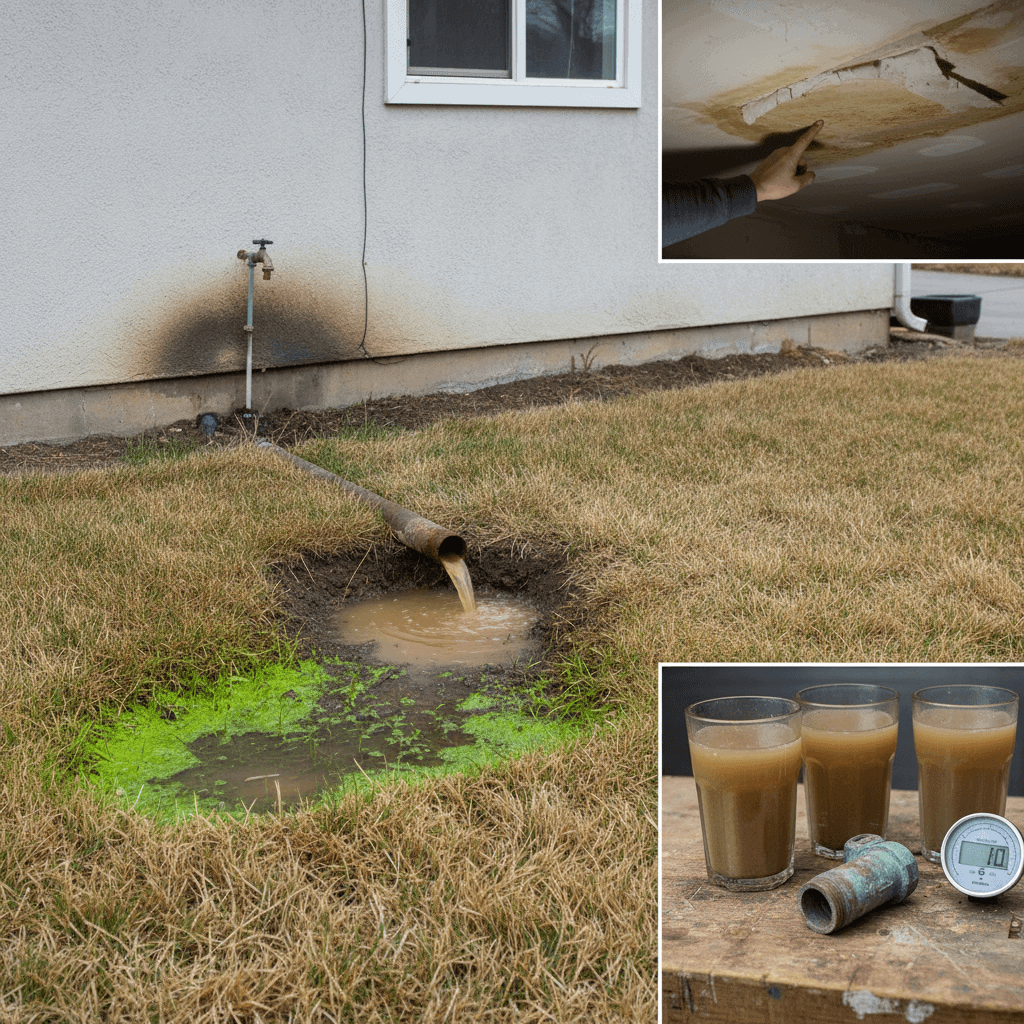
Spotting the signs you need water line replacement can save you money and prevent serious property damage. Many homeowners ignore small clues until a leak turns into a collapse or a sudden spike in the water bill forces action. This article walks through the most common warning signs, simple checks you can run at home, what professionals do during diagnosis, and how repairs are typically carried out.
Whether you have an older property with metal pipes or a newer home with plastic lines, understanding the red flags helps you respond quickly. I will offer practical tips, real world examples, and questions to ask a technician so you feel prepared if a replacement becomes necessary.
Visible and sensory signs around the house that point to a failing line
Not every water line issue announces itself with a flood. Often the earliest signals are visible or sensory and easy to miss. Watch for:
- Discolored water with brown, yellow, or gray tint when running a tap for a few seconds
- Cloudy water or particles that settle in a glass after a minute
- Persistent rotten egg or metallic odors from multiple fixtures
- Odd tastes when drinking tap water
- Warm or unusually cool spots on floors near plumbing runs
If more than one of these signs appears across several fixtures, the issue may lie with the main supply line rather than a single faucet. For example a homeowner reported brown water at both the kitchen sink and the bathtub. A camera inspection later showed corrosion in the main feed under the yard.
Exterior clues in the yard and near foundations that signal a leak
Some signs appear outside the house and can be a strong indicator that the main line is compromised. Keep an eye out for:
- Sudden soggy patches or spongy soil in an otherwise dry lawn
- Greener or lusher grass in a narrow strip that follows a pipe run
- Small sinkholes or depressions that form over time
- Cracks in the foundation or basement wall that appear or worsen
A practical check is to mark the meter reading then make sure every water-using fixture inside is off. If the meter moves, you have a leak somewhere in the supply. This simple test often points homeowners toward the need for a full line inspection rather than a localized repair.
Water pressure and flow issues that indicate a failing main line
Water pressure problems can come from many sources. When pressure loss affects the whole house it tends to mean the main feed is compromised. Here are specific patterns to watch for.
Low steady pressure across fixtures
If multiple taps have noticeably weak flow at the same moment, and the municipal supply is normal, the main line may be partially blocked or collapsed. A homeowner with a 30 percent pressure drop after a cold spell found the main had severe scaling and partial collapse at a coupling.
Intermittent drops or loud banging noises
Pressure that fluctuates or produces water hammer sounds can indicate collapsing pipe walls, loose fittings, or air pockets caused by a failing segment. Use a simple pressure gauge on an outdoor spigot to record readings during different times of day. Typical safe household pressure ranges from about 40 to 60 psi. Readings consistently below 30 psi point to a problem worth investigating.
Unexplained increases in water bills and what the numbers mean
Sometimes the most persuasive evidence is financial. A steady rise in the water bill without a change in household use usually points to a hidden leak. Small leaks add up quickly. For example one leak of 1 gallon per minute equals around 1 440 gallons per day. Even a slow leak of 1 cup per minute wastes hundreds of gallons each month.
Track daily meter readings over a week with all water turned off to spot hidden continuous flow. If the meter advances, you have a leak. When that leak is outside visible plumbing and affects the whole property, the main supply line should be suspected.
What professionals do during diagnosis and repair
When a main line replacement is likely, a qualified technician will follow a standard diagnostic route. The typical steps include locating the fault, visualizing the interior with a camera, and recommending repair methods based on material and access limitations.
Common diagnostic steps
- Locate and expose the main shutoff and water meter
- Use acoustic or electronic leak detection to narrow the damaged section
- Run a push camera to inspect the interior condition of the pipe
- Determine whether a partial repair, a segmental replacement, or a full line replacement is necessary
Repair options to expect
Repair choices can include open trench replacement, pipe bursting, or directional boring. Each method has trade offs in cost, landscaping impact, and timeline. Trenchless methods cause less surface disruption but are not suitable for every site or material. Materials commonly used for replacements include high density polyethylene, PVC, and copper depending on local code and water chemistry.
For homeowners searching for more details on what replacement work involves consult a reputable plumbing site. One resource that explains process and options is main water line replacement which outlines common approaches and timelines.
Questions to ask a technician before agreeing to work
Asking the right questions protects you from surprises. Consider these items before hiring someone for a replacement.
- Will the team inspect with a camera and provide a written diagnosis
- Which materials are proposed and why that choice fits local conditions
- Whether a permit is required and who will obtain it
- What the typical timeline looks like and how property restoration is handled
- What warranty covers parts and labor
Seek clear answers in writing. A straightforward quote with scope and exclusions reduces the chance of unexpected charges during work.
Short term steps to reduce risk while you decide on replacement
If you detect signs of main line trouble but need time to arrange a replacement there are steps that limit damage until repairs occur. Turn off the main shutoff valve if flooding is a risk. Use the meter test to monitor active leakage. Move sensitive items away from wet areas and reduce indoor water use to limit pressure on the line.
Root barriers and targeted excavation to remove intrusive roots can slow deterioration when plant roots are causing damage. Temporary sleeves or clamps can stop a leak for weeks or months, but they are not a permanent solution for an aging or failing main line. Treat such measures as temporary breathing room while you organize a full repair.
Signs that replacement should not be delayed
Some findings call for immediate full replacement rather than temporary fixes. These include repeated cracks or collapses in the same spot, sewage cross contamination, boil advisories from the utility, or active sinkholes forming near the pipe route. If an inspection reveals widespread corrosion or multiple weak segments, replacing the line in full is often safer and more cost effective over time.
Worrying signs paired with an increase in water cost or pressure loss should move the repair up your priority list. Replacing a failing main line is a significant project, but delaying may increase repair scope and restoration expenses.
Conclusion
Recognizing the signs you need water line replacement can prevent a small problem from becoming a major expense. Look for changes in water quality, unexplained high bills, yard wet spots, and consistent low pressure. Simple home tests such as the meter check and pressure gauge readings will help you gather evidence before calling a professional. When a replacement is required a methodical inspection including camera work will identify the best repair method and material for your situation. Ask clear questions about permit work, timelines, and warranties. If you notice several of the warning signs discussed here take action quickly to limit damage and expense. Contact a licensed plumbing professional for an on site inspection and written estimate so you can make an informed decision and restore safe water service to your home.